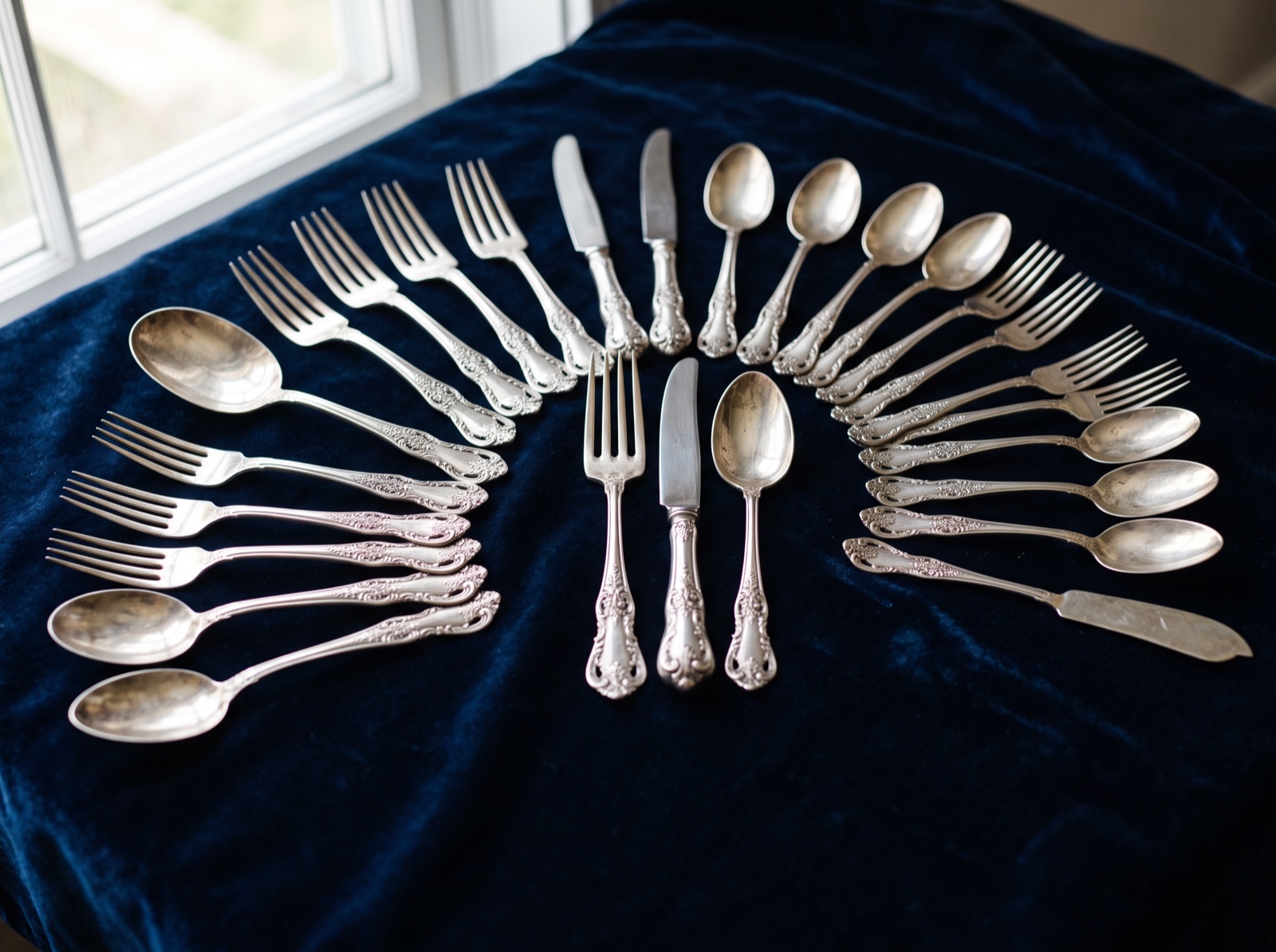
Yes, we buy sterling silver. Flatware, serving pieces, tea sets, candlesticks, trays and odd pieces from a drawer. Most people who bring it in are not sure what they have. That is fine. Here is how it works.
What sterling actually is
Sterling silver is an alloy that is 92.5 percent pure silver. The rest is usually copper, which makes the metal harder and more durable. That 92.5 percent is where the familiar “925” mark comes from.
Silverplate is different. It is a base metal, often brass or nickel silver, with a very thin coat of silver on the surface. It can look identical to sterling on the table. Its metal value is very small.
How to read the marks
Turn the piece over and look closely, ideally with a magnifier and good light. Common sterling marks include:
- “Sterling” or “Sterling Silver” stamped in full
- “925” or “.925”
- A lion passant, the walking lion used on British sterling
- “Coin” or “Coin Silver” on some older American pieces, which is typically a little lower in purity than sterling
Marks that usually mean plate include “EP,” “EPNS,” “Silverplate,” “Silver on Copper” and “Quadruple Plate.” A maker’s name alone does not tell you much, because many makers produced both.
Weighable vs. weighted pieces
This is the part that surprises people. Some sterling is solid all the way through. Forks, spoons, many bowls and most trays fall in this group. These are weighable pieces. Their full weight counts.
Other pieces are weighted. Candlesticks, some compotes, and the handles of many knives are made of thin sterling filled with pitch, plaster or another filler. The filler adds weight but no silver. A heavy candlestick may hold only a small amount of actual sterling. Dealers account for this, and it is one reason a weighted piece is often worth less than its heft suggests.
How sterling is valued
For most sterling, value comes from the silver content. The dealer weighs the sterling portion, figures the pure silver inside it, and prices it against the current silver spot price. Silver is weighed in troy ounces, not the kitchen ounces on a postal scale.
Some pieces are worth more than their silver. Early American makers, certain patterns, and fine hand-made work can carry collector value. If something looks unusual, ask. We would rather look carefully than guess.
Before you come in
- Do not polish it. Tarnish does not lower metal value, and polishing can harm collectible pieces.
- Bring everything, even pieces you think are plate. Sorting is part of what we do.
- Keep sets together, along with any cases or boxes.
Walk-ins are welcome Monday and Wednesday through Saturday, 10 to 5, at 2600 Beech St in Valparaiso. For a large service or a full chest, call (219) 508-6876 and we can set aside time for you.